




Water Security
Supporting the SDGs Goals

Commitment
- Promote responsible water use by providing knowledge and communicating with employees, customers, partners, and other stakeholders throughout the company’s operations and business activities, encouraging the efficient and responsible use of water resources.


Goals and Performance Highlights
Goals
- Set a target to reduce water consumption by at least 2.5% per year, using 2024 as the baseline year, compared with the water expenses of each operating branch during the same period of the previous year.
Performance in 2025

Water consumption decreased by
0.60%
Challenges and Opportunities
Water is a valuable global resource and an essential input in economic systems. However, climate variability driven by climate change has led to an increase in the frequency and severity of water-related natural disasters. In addition, economic growth and industrial expansion have contributed to water scarcity, flooding, and water pollution.
Management Approach and Value Creation
As the Company’s headquarters and all of its retail branches operate under a leased premises model within office buildings and shopping malls, water-related utilities, such as common-area restrooms and pantry facilities, are managed by the building owners (Lessor Operational Control). Therefore, the Company does not directly procure or purchase tap water.
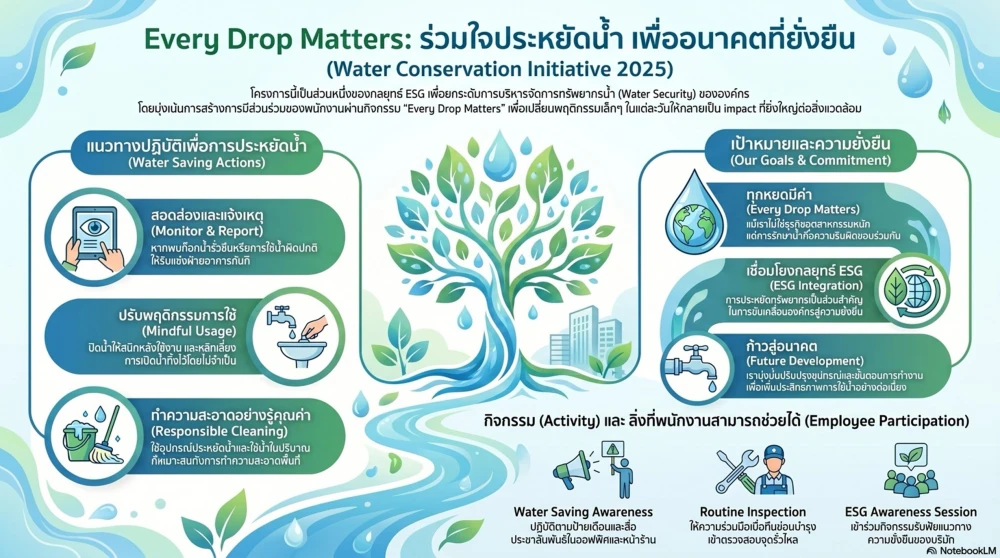
Nevertheless, the Company recognizes the importance of responsible water consumption and places emphasis on water management within its operations. The Company continuously communicates and raises awareness among employees at its headquarters and across all brand branches to promote responsible water-use behaviors through the following measures:
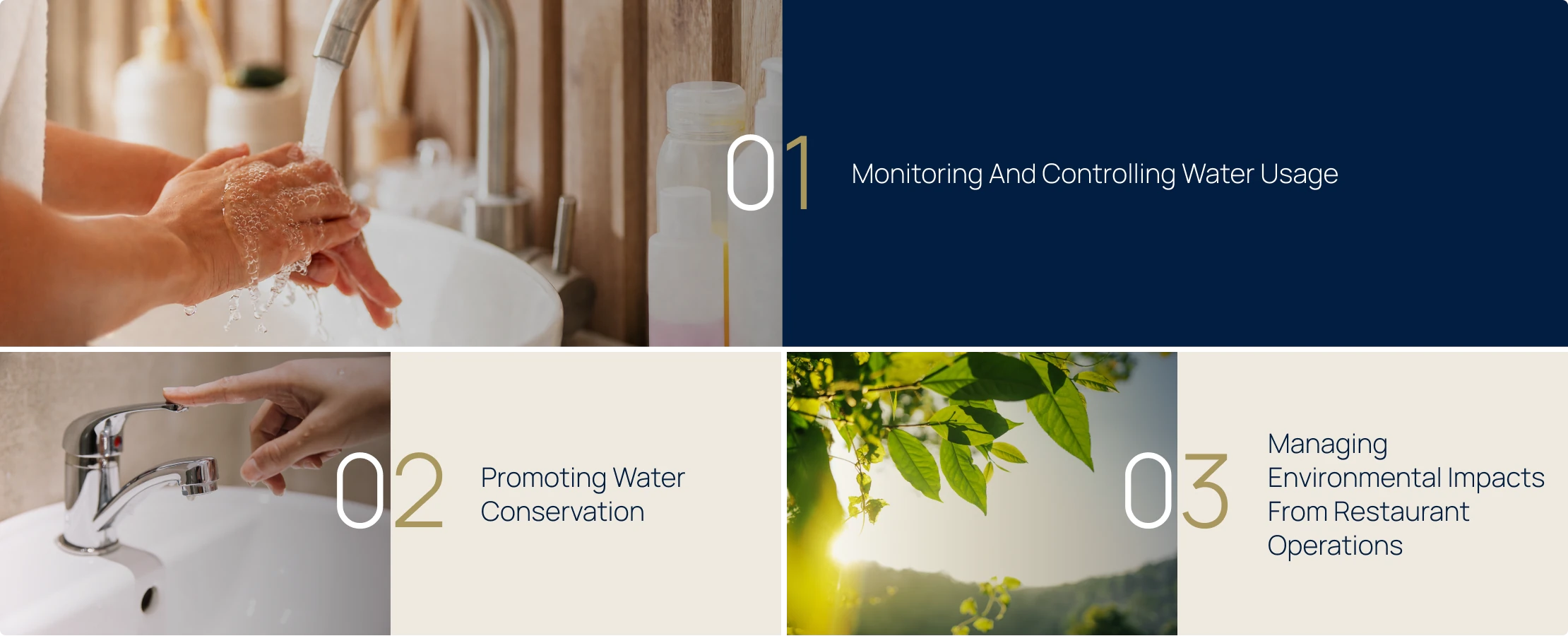

1. Water consumption planning and leakage control

2. Water conservation campaigns

3. Environmental impact management from restaurant operations
In addition, in 2025 (B.E. 2568), the Company began collecting data on water consumption at its warehouse facilities to gain a better understanding of the volume of water used and to support future planning for more efficient water consumption and management.
Stakeholders Directly Impacted